Rebeca Flores

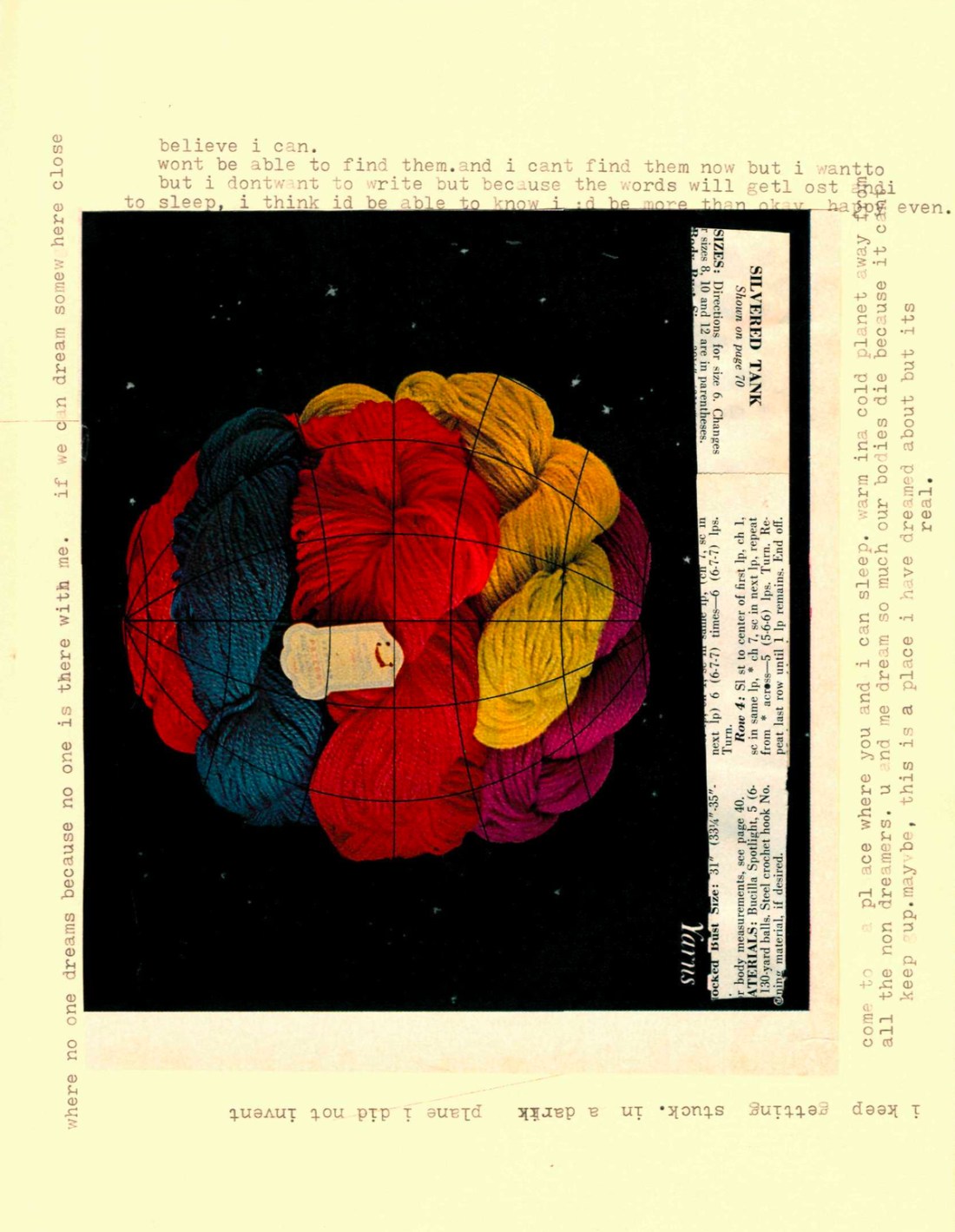
“No dreaming here please”

No dreaming here please.jpg

Krystal Cantú

Krytal Cantú

Rebeca Abidail Flores is a child of Central American and Mexican immigrants. She is an artist in San Francisco, California and has served as an artist in the Laureate Lab: Visual Words Studio under Juan Felipe Herrera. You can see some of her work in CWAA Literary Journal, Flies Cockroaches and Poets and San Joaquin Review.

Jennifer Greenberg

A Passive Aggressive Filibuster for Adulting

I could try those caffeine gums
that give you a buzz. I could make
a corporate decision. Glue antlers
on my head, to make a statement.
This isn’t a hipster confessional.
This is a wolf cry to a blank moon.
I might sprout whiskers from my face
at sundown, dream about war
in ancient times, when you had to be
strong to survive. I could
get a membership to the night life.
Paint my roses red in the dark. I could
get all the fixings for revenge,
ask my auntie for the recipe. I know
the only way to make it is to fake it, so
I keep my hands extended always.
You never know when
you’ll need to clean a spill.
Writing this in lipstick on my wall
will make it real. I know the placement
of mother-in-law tongues in the yard
to ward off an evil I’ve never met,
and I can make a man come
back without knowing what for.


Our House

In the new house we eat off a dead woman’s
china. The eggshell porcelain
makes our hands quiver;
we fear the fragile weight of bad luck.
In the sheetless bed we share a mug of water.
The backside of knees make a hollow
for other knees. We watch silent movies
in the dark, mimic the black-and-white faces
and flake insect wings off the light fixtures.

They say two births happen when a soul is born:
One of a child and one of a mother.
She asks why we come here.
The new house is  chalky and beaten
with hale. Its roof breathes out a sigh
every morning / sucks it back in at night.
We kill time gluing baseboards together,
run the garden hose all Summer.

I take time to take her in: savor the
cream-sweet scent of new skin, keep it
in my throat like the bee makes honey;
feel the collagen cheeks and celluloid
fluff of what will become a bicep, a heavy thigh;
her smile of deciduous teeth; the Roman lips someone will someday put their mouth to, the way I once told her father we are important to each other.

She asks why the moon
takes her mother to the porch each night, to
pray into a candle, breathe smoke like a
dragon.
In the bathroom I jump at my own
reflection; peel back paint bubbling
on the western wall.
Journals of algae bloom in the rafters.

God knows we mean well.

For a Child Leaving

She leaves behind her breakfast.
I pick off the ants sniffing around,
pressing them down with the pads
of my fingers. Indigenous people
would thank the animal when they kill it.
Such good manners.
The child left without an apology.
I waited in the kitchen, listening to nothing,
hoping to be interrupted.
We whisked egg whites into their yellow
embryos and fried them over red onions the
child staring, perplexed, my eyes
watering over the skillet. I kissed her
goodbye like making a lipstick stain
on an envelope, reminding her to call
once in a while. So much goes to waste
without gratitude. But the child
takes only what she needs, leaves
the rest for the world. Leaves me
grasping for some kind of affirmation,
a mother learning how to love
like a child: without permission.

Jennifer Greenberg is a Florida native working on her BA at the University of Central Florida. Her work has appeared in Sonder Midwest and Chomp.

Akif Kichloo

My Father Says Poetry Will Not Pay My Bills, Clinical Practice Will

On the inside of my ribs, dreams flower into guilt,
turn into a familiar heaviness there is no getting used to.
My chest is nothing but fire, a dry-wood house that will burn
until all my desires are repressed. In my window,
the moon glitters, as if trembling with truth. Tonight,
to keep from dying, I bury myself in a poem.
The moon shirks in shame. Hides behind my father’s
mountain of a shadow. During the day, the sun lights my sky.
My sweat lubricates pistons of some hereditary engine inside my limbs. I run
from room to room. Patient to Patient. With my father egging me on, I cure
every illness my god has conjured. See, in my profession I correct
my god’s wrongs. In my passion I wrong my father’s right.
I don’t know how this art came to me. I don’t know when I became
everything I was never to be. But these words creep up on me, you know.
Jump out of dark allies and rob me of all comforts of the world.
I never see approval in my father’s aging face. And I write a poem.
I never spot peace in my mother’s beautiful eyes. And I write a poem.
My brother keeps forgetting my name. And. I write a poem.

homology-lit-.jpg

Akif Kichloo is a poet of Indian origin currently alternating residence between Saginaw, Michigan (USA) and Kashmir, J & K (India). With a bachelor’s degree in Medicine and Surgery, he has been eating shoelaces for the past year because he gave up everything to write poetry.

T. Guzman

Gummy Bears—Things Necessary and Unnecessary

+++++Separation is necessary.
+++++But not really necessary.
+++++In that way that some things are.
+++++You must get out of bed. Remember to wash your hair. Brush your teeth, one minute top, one minute bottom. Look into the fridge and check the expiration dates of eggs and milk. Make a list. Apples and oranges and bananas. Let people know where you’ll be so they don’t think you’re dead. Text every once in a while. Maybe.
+++++This isn’t that sort of thing.
+++++It’s forks and knives and spoons. A thing of ease. Dedicated compartments shaped in outline of their intended recipient. The world will not end if you don’t. Nothing hinges on your peculiarities. You don’t have that kind of hubris.
+++++In the first apartment you ever lived in, you never bought one of those compartments.
+++++Kept every utensil in a Ziploc baggie.
+++++Intermingled.
+++++Contained so that when you opened the drawer it wouldn’t make that scraping noise that gave you headaches. You were happy in that apartment. Even when you weren’t. The planes that flew over every thirty minutes became a thing you missed. The way all conversations stopped organically at their approach, starting back up again after they passed with hardly a nod or look of recognition. Annoyance passed into the unnoticed.
+++++Green, Yellow, Orange.
+++++In that order.
+++++Red or White last. Under most situations, the difference is negligible. A matter of mood. Time of day. White in the sunlight, Red in the wind. The shift in the pressure of your joints as the clouds come.
+++++Waiting.
+++++For the apartment to flood. For the rain and muck and slip to back up the old ceramic pipes, breeched by tree roots planted too close or maybe not too close long ago when they were planted, but too close now. The gray. The indecisiveness in the air—humidity and sirens. Put all your things on top of other things you don’t mind getting wet. Light a candle for each room. Then assuming White is grape flavored, and Red is Cherry or Strawberry, White first then Red. But in the case that White is Pineapple, Red being in this case Raspberry, one of each is preferable, though this will deplete the supply faster and may not last the night. An alternating order is also acceptable.
+++++It’s not really all that important.
+++++Whims and fancy.

+++++Green must be eaten first.
+++++First because Green is objectively garbage, tasting nothing like lime which is itself an undesirable flavor, but at least recognizable—sweet and dull with an aftertaste of uninspired that only ever reaches heights of unpleasant when eaten in succession. Like dark matter, Green is only definable by what it is not—its effects on the bodies that surround it. It must be endured. Days without potable water. Trees on power lines, on houses and cars. The busses never come no matter how long you wait. You’ve given up on the metro and walk. Miles across food deserts expanded by downed grid and cash only and who carries cash among these unpaved sidewalks littered with old McDonald’s cups and redlining. The chill never leaves you, bathing in the cold for weeks. Your core temperature is permanently lowered because everything is transitory, and overtime, if you find that Green, in an act that feels alchemic in nature, becomes something you enjoy eventually equal to that of Red or White, your bewilderment is justified. Repetition and enjoyability are counter intuitive.
+++++It’s okay to be disturbed by this.
+++++It’s, in fact, disturbing.
+++++Time plays a factor.
+++++Continue the order Green, Yellow, Orange.
+++++The guilt of enjoying Green will fade.
+++++Yellow and Orange, no matter how much you consume, will always be mediocre.
+++++The world makes very little sense.

+++++The ratios may be off.
+++++It is a flaw that happens.
+++++Most of the time worrying about this is unnecessary. Quality control is, for the most part, consistent. Yes, there will be occasions when there are too many Yellows. Oranges for days. Reds few. Whites nonexistent. Greens, Greens, Greens, everywhere so that you’re certain mistakes were made. Unlike clothing, the inspector is never listed. It is not something you can track. There is no way of knowing. Perhaps, it’s a matter of sleep. Maybe, they lie awake on the futon in the living room for hours and hours waiting. Perhaps, once they’ve finally drifted off, the apartment shudders. The pots and pans and glasses and bowls clink. Rattle. Their roommate emerges from their room. You are awake again. You can’t explain the unexplainable. Earthquake. Planes flying too low and off course. How are you to know? Translucent packaging is to be sought after, but the unexpected cannot be prepared for. If you must move from color to color eating till the ratio is satisfactory, knowing that you will leave at least one color with an extra or two—asymmetry being desirable in certain circumstances—do not be alarmed.
+++++Do what must be done.
+++++Small acts of control are not something to be concerned about.
+++++When you were younger, you read about walking meditation from a book you purchased from Disney World. Read on the returning flight. The woman next to you desiring your window seat, craning her neck forward and over many times to see the expanse of clouds and blue. The gridded landscape. Plots of rectangles. Trapezoid. The odd triangle, obtuse.
+++++To go through like a thread in a loom.
+++++Taking full breaths before each step. Walking in circles, in long lines, back and forth. There are twenty-four steps from the sink to your room that you never go into. Eleven to the futon. Five from the front door. You read the greatest of monks, spending their entire life in the practice, were able to adapt this so that life was spent in near perpetual nonthinking, awareness entirely in the present action. Their hands are wet as they wash the rice. The grains minuscule, individual. The sun is warm in the garden. Scent of earth and moisture. The ground is firm underfoot.
+++++Everything around them passes without judgment, affect.
+++++Do they ever have to put things on top of other things?
+++++When the room shudders, are they concerned?
+++++Their robes heavy.
+++++Bodies reduced of all that is superfluous.
+++++You will consider this as you eat each one.
Green, Yellow, Orange, in that order.

T.Guzman writes, and does things in general. MFA student at Northern Michigan University. Hopes to one day be a robot. Splits time between the UP and Southern California. Tweets @t_guzman

Aria Pahari

Reflexive

read the instruction manual,
wrap the wound again, dig.
as the pile of soil starts to rise,
take more breaks. hydrate. walk
away from the tunnel if needed.

your mother needs you. she raises
a lantern. light thrown on the wall
spells through the dirt: asexuality
is not a disease.

follow the sheen. look down.
coats of cling film cover you.
peel back the layers to blend

with shades bestowed upon
your mother: your bearer,

a spring from beneath the earth.

Torch Light

glows on faces I could have known. Rings of shadow darken the crevice between shirt collar and skin. Captured mid-chant, the mouths of the white men open to black. Their torches move through my memory en masse. I stare back, razed. I was raised in Virginia. We remembered a classmate’s birthday every year of elementary school because he shared the date with Thomas Jefferson: founder of our state university, of America. Jefferson modeled the library after the Pantheon. The Rotunda’s circular chambers were to be the university’s academic heart. Its dome looms behind handheld flames, unmistakable.

Aria Pahari resides in Virginia and has a BA in English from Mount Holyoke College, where she was the recipient of the Millicent Allen Lyric Poetry Prize. Her poems have appeared in Kajal Magazine and The Asexual Journal.

Bat St. Chip

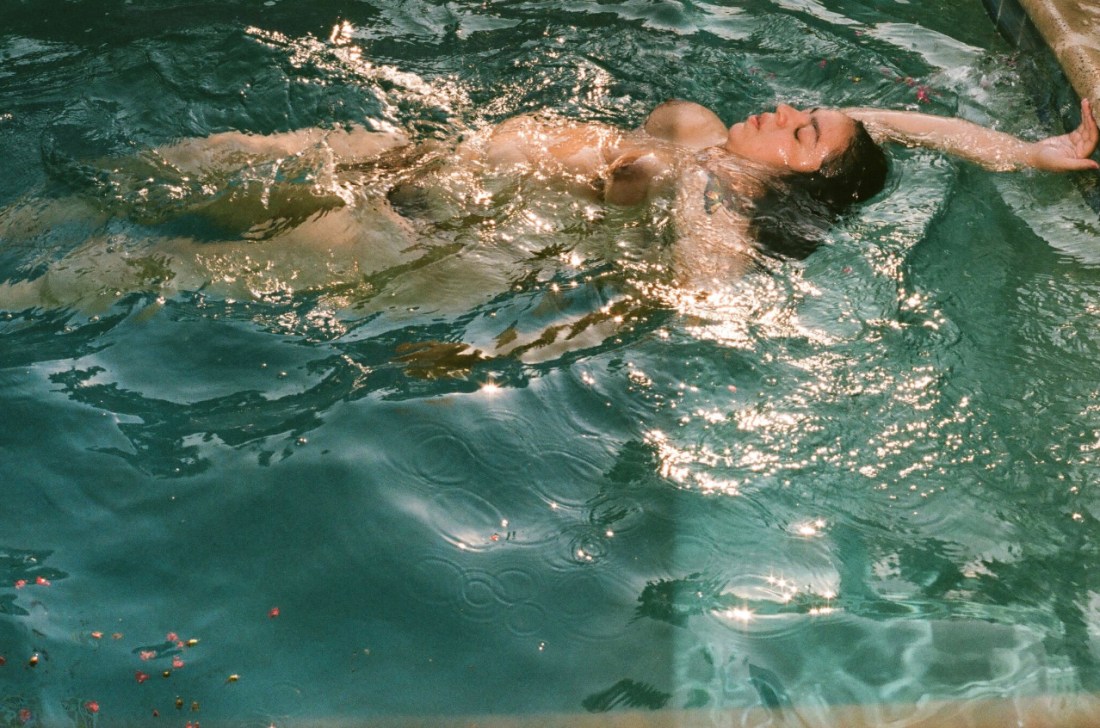
web

web

sleeping gal
sleepinggal

Bat St. Chip is a multidisciplinary visual artist and musician. They graduated with a Bachelor’s of Fine Arts in Painting from Pratt Institute. Bat’s work depicts otherworldly beings or persons in the midst of the strange. The creatures appear in expressionist paintings, animated gifs, and energetic ink drawings. Now residing in the Pacific Northwest, Bat is the front-person and founder of the doo-slop, garage punk band, GRIN HOUND. GRIN HOUND recently released the EP “KNOCK MA” and is ever engaged in bridging the gap between the world of cartoons and Rock’n’Roll.

Khalisa Rae Thompson

Reclaiming Our Phenomenal Bones

We left them on the back stoop,
abandoned our phenomenal like baby on step
for anyone to pick up and call their own.
I think we tucked it under our tongues
let it dissolve and melt away.
The taste of it still lingers.
I think we spread our phenomenal across beds,

in the backs of cars where we opened it for anyone who said
the magic word.
Think we smeared it on counters and couches,
made it a jam or marmalade to lick-
a temporary satisfaction.

Woman, you have been everlasting & phenomenal
since the beginning of time,
since the Nile and cradle of civilization
and Lucy.

Your phenomenal bones were found as proof that we were once here
And breathing.
And everything.

You have bought nations to their knees,
stretched arms and bosom wide to nurture thousands,
opened mouth and made even the most powerful cower.

The click of our heels have been the syncopated tone
for soldiers that follow our every stride.
We have always been a phenomenal destination-
brown stone thighs, a hand-crafted cathedral of a waist,
sweltering temple lips,
a museum of a mind,
we will find our phenomenal
when we stop looking
and just be.

Khalisa Rae is a queer black activist, that speaks and writes with fierce rebellion. She published her first book Real Girls Have Real Problems, in 2012.  Her recent work has been seen in numerous journals including, Requiem Magazine, Dirty Chai, and Tishman Review, the Obsidian, Anchor Magazine, New Shoots Anthology, Red Door, Red Press – Anatomy of Silence Anthology, among others. She is a finalist in the Furious Flower Gwendolyn Brooks Poetry Prize and a winner of the Fem Lit Magazine Contest, and the Voicemail Poetry Contest. She is a former staff-editor of the QU Lit Mag, and currently serves as Co-editor and Co-Director of Athenian Press- literary safe space collective and indie press for women/femme/gnc/trans folks. Her full-length poetry collection is forthcoming.

Brooke Tapia

The Daughterless Collapse

In this way, a woman is an echo
Reverberating softly through an empty house
The almost-silence, palpable
A begging to be forgiven
Or forgotten

So as not to be ravaged
By the same hands that tear into
Overripe fruit,
Animalistic in their desperation
Unkempt fingernails in orange rinds
& the sour scent on your hands for days
So you feel untouchable
Knowing you’ve devastated something soft

Scene change, and it’s clinical
White walls and sterility
The womb of your unhinged anger
Still bursting with bleach

We are the products of untimely births
You may call us daughters
See: drought
Suffocating heat from the inside out
Because women don’t know how to half-love somebody
Haven’t given ourselves permission to unbury our fists
From the mouth of the river we call our father
Or gut the fish of our mother’s heart

The undoing starts with the underbelly
A slickness, a violence,
A festering wound of mistrust

Call it the daughterless collapse
The way your jaw aches, humanly
Body sallow and sunken in all the soft places

When’s the last time a father let anything be soft?

Or forgiving, like time
Softhearted in its transience
How it gives and gives
And never hurts

The liminality of daughterhood
Echoes through eighteen years
An unraveling hunger
The heredity of pain

How it hurts and hurts
And never gives

Brooke Tapia is a lesbian poet from Soldotna, Alaska. She is a first year, first-generation college student (entirely fueled by rage and caffeine) pursuing a Bachelor’s in English. If you’re reading this, this is her first publication.

ren hlao

sumac

has short sex+++on your gnarled ankles wets
them++licks them++++++there are less
bees this year++++++++++sumac lays purple blisters stays++++deep into the spring
this year steeps a young vein that stretches like territories
stretches up your fluorescent++thighs hairthin long or short cancer filament
to your ass for summer this year i live

in the purple wastingcabinet next door the light++++++bulb in the kitchen
is a conquered globe of slept-on amber in the shape of a body+++++++that swings
like a scythe weep+++in the cabinet
black pepper acridretch+++++cloves of garlic yellow
onion yellowed coffee filters++++++i cook dinner coarse+++purple potatoes bulbous
ritual sacrament you have sumac again it loves+++at you
again in the dark+++++the wilting cradles you until it hangs you purple

where your father finds you melting purple this year++++++your mother
balls up on the front lawn like litter++sumac dots
the property++swells— is bloated like an altar+++++++breathes black bubbles
swallows probably

nettles
++for riri

++++++the kitchen table on the fourth floor of the copycat
++++++building in baltimore has a tablecloth of cigarette ashes. it’s early morning and ++++++you’re swallowing merlot from a brownstained mason jar and michael

++++++++++++is telling us how it feels
++++++++++++better being fucked
++++++++++++by two men rather than one, how

++++++++++++++++++in orgasm, the vein creases
++++++++++++++++++(that wicked little gardenhose);
++++++++++++++++++we sit wet and splintered.

++++++last night, eroding in acid,
++++++we drank graham’s sour
++++++homebrew, spilt it howling

++++++++++++++++++onto everything. the police
++++++++++++++++++swam up out front
++++++++++++++++++and we threw our bottles down

++++++++++++onto their windshields, fed
++++++++++++our exarcheia. downstairs lipswet
++++++++++++into the street we dragged

++++++++++++++++++knotted treelimbs, pallets, mephitic dumpsters.
++++++++++++++++++blinking bluelit crane cameras
++++++++++++++++++craned their rusted ropenecks,

++++++watched the tiny shivering
++++++cars limp backwards up guilford:
++++++pockmarked, bathed in ache. early today

++++++++++++they came, bang-banged++++the doors
++++++++++++and we howled our ribs into knots,
++++++++++++the sun was a rusted coin.

++++++but heroin is mute and we’re all
++++++coughing porch moths frantic in fragments of light. but you,
++++++bloodsunk in the palm, wound up

++++++++++++++++++by all your wounds, dried
++++++++++++++++++in the thicket;
++++++++++++++++++your stem spat

+++++++++++++++++++++++++bright liquid. but you,
+++++++++++++++++++++++++sunk into the palm, and
+++++++++++++++++++++++++we howled.

ren hlao grew up outside of baltimore, maryland. their work has appeared in online and print publications including Homestead Review, White Stag Publishing, and Dangerous Constellations Journal. they are a queer, Chichimeca artist. they live in san diego, california with their partner and four dogs.


Delany Lemke

small town ses-teen-a

The bored nights take us teens out to Lost Deer Lane

where the ticks will not twist off our hot blood
once they get a hold. We drink polluted river water
and cheap vodka mixed in old bottles from the floor of the car,
sneak past the house on the corner by turning off the headlights
and snake down the dirt road where street lamps don’t shine.

Sometimes, we drive out there because someone took a shine
to us, wanted to lock lips in the backseat on Lost Deer Lane
a dead end road where we know there won’t be any headlights
and when we lean in, gorge on the feel of skin, all the blood
rushes to the cheeks, our bodies revving and rolling like cars.
Other nights a handful of us cram in to smoke out of a water

bottle and a pen. Usually we park and then ask what are
we doing here? It’s been a long year, little sunshine
and we keep ending up bored at midnight and in cars
driving back roads and winding our way to Lost Deer Lane
like it called us, like the gravel worked its way into our blood.
The town’s already infecting our dizzy heads. Light

conversation makes our heads ache like headlights
in the eyes. So we pull at our vodka and river water
for something to do. There’s something metal like blood
in the drink, probably from the factories that shine
all night on the river. Two of our classmates were lain
to rest this year; someone always drowns or crashes a car.

Funny, how we cope by climbing right back  into our cars
with a bit of liquor, near blind without our headlights
when we sneak ourselves down the dirt on Lost Deer Lane,
a bunch of reckless kids lost in the backwater
midwest, where there’s not much to outshine
but the moon and the river tastes like blood.

We can ignore that, there’s always blood.
Our uncles bring home deer on top of their cars
and we’re used to gutting, the slick shine
of insides. Deer that get caught in headlights,
smash windshields, then wait on the asphalt under rainwater
until the highway technician hauls them out of the lane.

We can only imagine a shine that’s not blood
out on Lost Deer Lane, drinking together in our cars,
or we end up imagining what our headlights look like underwater.

A poem in which I try to talk about being queer in the rural midwest and I just end up talking about deer again

You don’t know how to feel about us
trotting around your mown lawn
ravaging sweet wet apples off your tree.
We lock antlers, raise a clatter in the wood,
agitate your family dog to fits of barking,
gnaw on your juniper bushes, garden violets.
We see your chicken wire fences, your garden
coated in hot sauce and sick fermented yolks.
We’re the kind of beautiful that gets shot down.
You forgot that we have been here
since the eocene. Clothing you, feeding you.
We’re in your myths, shadows in the trees,
and after this long dead winter, our hunger
will not be kept hidden in birch and pine.

Delany Lemke is a queer poet in her first year of her MFA at the University of Alabama in Tuscaloosa. She is originally from Marysville, Michigan, and received her undergraduate degree from Central Michigan University. Her poetry has been featured in Juxtaprose, Temenos, and 30 N. You can find updates on her life and poetry, her thoughts and pictures of her cat at @delovelylany on Twitter.