Kimberly Smith

Why I Cry

Though many animals shed tears, crying has always seemed uniquely human to me. Humans, the soft primates we are, shed tears from childhood to adulthood, a fact that I found confusing for many years. Crying could not be explained with a formula or tucked away neatly inside any logical domain. There was something primal about crying. It seemed suitable for the forest-dwelling primates but somehow undignified for us bipeds. What is the use of crying for rigid, suit-wearing, sophisticated creatures like us?

I have been searching for an answer to the question of why humans cry for most of my life. As an easy crier, I have cried in more public places than anyone I know. I have cried in theaters, in schools, and in restaurants. I have cried in the back seat of my parent’s car, alone, in a small town in Oregon. I cried once at a Starbucks before a music audition, and then again at the actual audition. I cried at my high school graduation, and at many yard sales. I have even cried in a DMV, though I imagine that isn’t an uncommon experience. The point is, I have done a lot of crying.

Crying, I once believed, was a hindrance and a weakness, one that reflected poorly on the crier’s character. This idea, planted in my head during childhood, took root and festered. People around me frowned upon crying in public. In dance class, crying earned scolding from the teacher and snickers from the other girls. At the grocery store, it provoked strange looks from the adults who sneered as they passed, hunched over their wobbly shopping carts. On car rides home from school, crying earned me long lectures suffused in second-hand cigarette smoke. I quickly learned how hard it is to be taken seriously with tears in your eyes.

As I grew older, crying became less and less acceptable. I cannot remember the first time I was instructed to “control my emotions,” but those words have remained an echoed cadence most of my life. I learned to tighten my lips into a straight line, still my shaking shoulders, and blink tears away. I became an expert at scheduling my emotional breakdowns. Tears were saved for the car, for the quiet corners of the school library, and eventually, for my bedroom floor.

I spent most of my public life inside uncomfortable and uncertain restraints. I dared not step in public without squeezing into my tight emotional corset. Hiding my emotions consumed an incredible amount of energy. Sometimes, I would simply run out of fuel. My emotional exhaustion led to me breaking down in restaurants, which is one of the most embarrassing and poignant types of crying I have experienced. Restaurant crying occurs when you are seated across from your mother at your favorite Asian restaurant late at night. A warm breeze sweeps in through the door, and the clinking silverware reminds you of wind chimes. Your food has just arrived when your mother mentions that you will have to buy sheets. Then, the waitress comes to ask whether your food is alright because you are sobbing into your vegetables, and yes everything is alright, thank you, but no, everything is not alright.

As spring turned to summer, a few months before my freshman year of college, it became clear that something needed to be done. I had graduated at the top of my high school class, the weather outside was beautiful, and there was no reason to worry—yet, I was spending my mornings in bed with the curtains drawn, sobbing into my coffee cup. I was exhausted, and people noticed. My family decided that it would be best for me to see a counselor. It was from that counselor that I would finally begin to understand the purpose of crying.

After pacing outside the counselor’s small home-office for a few minutes, I finally gathered the courage to enter. The kitchen, which served as a makeshift waiting room, was objectively inviting. Over the windows, lace curtains billowed as a warm summer breeze drifted in with morning sunlight. The counter was littered with empty mugs, and a tea kettle rested on the stove. “Help Yourself,” read a sign next to a wooden box of tea packets. It was a nice place, but during my first visits to that house, I sat in the kitchen alone, waiting with dread. Will I cry here today? I wondered. The answer was yes. I cried in every session during those few months of counseling.

But I remember one specific visit. After moving from the kitchen to the darker, less comfortable living room, I sat down on the farthest corner of the stiff couch, the side closest to the unlit fireplace—and to the door. In retrospect, I must have looked like I wanted to get the hell out of there. I sat on my hands, fidgeted, and looked out the window, a bad habit I kept through every session. Outside, I saw only parked cars and a run-down neighborhood with dilapidated houses. No trees. No wildlife. Just people.

My counselor sat across from me with his glasses perched on his bird-like nose, pen in hand, waiting for me to direct my gaze away from the window. When I finally did, he cleared his throat and ran through the niceties.

“What have you been thinking about?” he asked.

As was the case during most of my visits, I failed to provide a sufficient answer, instinctively regurgitating whatever vague suggestion he had made to me the week before. Then he asked me a question which took me by surprise:

“What’s making you anxious today?”

I might have laughed. That question was going to take a long time to answer. I was confident that I could fit every letter of the alphabet into that list. A for ant infestation. B for basic human interaction. C for crying. I was certainly crying by then. The ever-growing mound of tissues in my lap was a reminder of my shame.

“What’s making you anxious today?” he asked again.

I focused on shoving tears back into my eyes, an impossible task. I stared intently at a bumblebee hovering outside the window as I mumbled a few words. They were the same worries I had talked about in previous weeks, little things like school and chores and the inevitability of change. When I finished, there was a pause. Then my counselor gave me the look. You know the look—the therapist’s look. It’s the look they give you when they know you’re not saying everything on your mind. By the time you get the look, it’s all over. You can give up on keeping whatever it is a secret. If you don’t say anything, they’ll tell you the same thing they would have said if you had been open with them, but they’ll say it in a passive-aggressive tone which will make you silently hate yourself.

“Is that all?” he asked.

“Yes,” I lied.

He gave me the look again.

“Well, actually,” I said, changing my mind, “I’m also worried about the fact that I’m crying.”

Through blurry vision, I saw him nod.

As counseling continued, things got better in general. I began to understand why we cry. He often explained the psychology behind shedding tears. I may not have been a very good client or a very good human, but I was a good student. I would listen carefully as he showed me diagrams of the brain, and I always did my assigned reading. One day, when I was feeling particularly weepy, he laid out a chart of the nervous system on the coffee table and pointed to it with a ruler. According to this chart, I cried when there was no room left to hold information. I began to imagine myself as a human-shaped cup, filling to the brim with thoughts and then spilling over at the slightest shaking of the world’s table. Crying was important, my counselor believed. It helped reset my nervous system and calm me down. It wasn’t my fault that I cried so easily. In fact, it was a biological necessity.

Finally, I felt vindicated. I left the office and went forth with the knowledge that I shed tears for a reason. This information helped me understand why I wept in public. Now, when the tears came, I took a breath, ignored the echoes of “control your emotions,” and went on with my business as best as I could. There was some peace in understanding. I felt like the other primates for once. I felt wild, instinctual. Everything I was could be explained by biology.

There was no shame in being a creature.

It is true. There is no shame in crying.

Unfortunately, however, my counselor’s explanation could not account for all the tears in my life. I can find no scientific evidence of the explanation he offered, as helpful as it was. Instead, scientists more often suggest a social function for tears. Crying, they say, signals vulnerability and helplessness to other members of the species. Subsequently, tears increase the likelihood of receiving help. They are visible enough to capture a kind stranger’s attention but quiet enough to pose no risk. This is, of course, why children cry when they are hungry or scared. I imagine it is also why they cry when they are lost. It is also the same reason adults cry. Shedding tears is a literal cry for help.

Counseling, for me, was an exercise in this vulnerability. While I sat sobbing, barely managing to speak,I was unlearning everything I had ever believed about crying. Without any instruction, I had taught myself to hate asking for help. I feared doing so made me incapable, a nuisance. I would wander in a grocery store for hours rather than ask an employee for help. Telling anyone how badly I felt, how badly I had been feeling for years, had been unthinkable. Despite my emotional discomfort, I suppressed my tears day after day because it was better than being what I was naturally: a mess. I spent so much time loathing my emotions and hiding them away like fugitives that I had kept them from serving their only function. What use are tears if there is no one around to see them?

Counseling brought me out of hiding, allowed my tears to be seen. It taught me to say “No, everything is not alright” and “Yes, I would like your help. Thank you.” Counseling allowed me to be a lost child accepting help from a stranger. During those three months of weekly sessions, I learned to embrace my vulnerability.

The first time I sat down on that couch, my counselor asked if I wanted to be there. The tears streaming down my cheeks were answer enough, but he wanted me to say it out loud, confidently, for practice.

“Will you please help me?” I asked hesitantly.

“Will you please help me?” My tears asked silently.

“Will you please help me?” we ask now, still.

My counselor and the two others I’ve had since all agreed to help. Most good people will. Tears are a silent question. I had to remember how to ask that question. I am still learning to ask that question. I haven’t quite gotten the hang of it yet, but I am trying. It may have taken months, years even, but I have finally started to weed out all the negative ideas about crying that were planted in me so long ago. I don’t sneer at kids crying in the dairy aisle anymore. They’re only asking for help. Who are we to think we are above crying anyway? We’re not above asking for help, or receiving it, or offering it to those who need it. So, if I cry when I am talking to you, now you know why.

Kimberly Smith is a queer writer and cat enthusiast from the Pacific Northwest. She recently received her B.A. in Professional and CreativeWriting from Central Washington University. Her work has appeared in Rag Queen Periodical and Nota Bene, an anthology of writing by two-year college students. You can find her on twitter @Kimberly_363.
C.T. Salazar

Definitions of Teeth

of animals a set of hard, bony structures in the jaw used for biting /
and chewing / see also fang / tusk / incisor / the dog / its foot bloody in
the railroad track / for instance / doesn’t hate you / he hates how the world

is a trap / set against him / his teeth / shining like new moons to show
you / he could serrate you / the world is hungry / and he refuses to be
swallowed / of tools definitions abound / think teeth on the saw blade /

think about the bites / that noisy bulldozer took out of your childhood
home / the bed you don’t sleep in anymore / the sheet music strewn across
the floors / teeth as tools / do not forget their function / the jawbone she lifted

from the woods / of some long dead animal with a bite / yes I was
jealous / of bone / I wanted to be held / heaven help our rot / our fingers
tangled / the long fang I pulled and crammed into my jeans / weeks later

I put my hand in my pocket looking for change / and the tooth sank
deep into my thumb / the rush of pain / brought back everything / the day
in the woods / the sharp cracked relic / the last time wonder / meant waste

Four Reasons That Prove I’m Still Alive Ending With Five Reasons I’ve Never Learned God’s Name

I. The scar from a dog bite came back eleven years later
after I got a tattoo over it.

II. In the cathedral, a homeless man pulled a revolver
on the usher and took the collection plate into his hands.

He ran through the tall doors

III. like an angel running home.

IV. Jesus wept, didn’t he? My father did
when his mother died.

I. When the dog grabbed me, I wasn’t sure he’d ever let go.

II. Even today I can’t say what made him stop, in the same way
I’ll never know how many spiders live in my apartment.

III. Describing the cathedral, I said the inside is the opposite of the
outside, but it’s still gorgeous.

IV. How many things can this be true for?

V. I would only recognize God’s voice if it came as a dog
barking. That was the first time I tried to talk to him.

Sonnet For the Barbed Wire Wrapped Around Childhood

You were the first to show me what my blood
looked like + praise be the first to say no
to my soft body + sharp apology +
I know your name by heart: NO TRESPASSING
you tight metal fist + glory your afterkiss
I saw you barbed on Christ’s bleeding head
+ knew heaven meant losing parts of myself
to jagged teeth that look nothing like mine

+ hallelujah those bloody parables
about how paradise leaves scar tissue
+ maybe I wanted the world to wrap
around me regardless of what that meant
+ on my arms these torn constellations
made me heaven + my chest of bright stars

C.T. Salazar is a latinx poet and children’s librarian from Mississippi. He’s the author of the micro-chapbook This Might Have Meant Fire, forthcoming from Bull City Press. He’s the editor-in-chief of Dirty Paws Poetry Review. His poems have appeared or are forthcoming in Beloit Poetry Journal, 32 Poems, RHINO, Grist, Tampa Review, Cosmonauts Avenue, and elsewhere.

Marilee Goad

Braided Anchors

The summer I met you, so humid I drowned
my prayers in sweat, knotted my hands into
fists I plunged into pockets empty of artifacts
save for the lone pottery shard lost from its
cousins, my hair so long and undone, I finally
learned to bend it into braids I hung from my
heavy head, the weight of hair anchoring me
to an earth I kept trying to leave though you
told me not to –

eight years later, I shaved my head clean,
stubble sprouting from raw skin red from
relentless scratching, my restless hands unable
to contain their worries between pockets I no
longer possessed, my slim pants too small, too
tight for anything beyond my thin limbs, you
called me gaunt and I pretended not to hear,
tried to eat away flesh out of existence but
you stayed my hand

fed me books when I forgot to read, the pages
so worn on my tongue, so rich the words melted
my tears into unspeakable memories I sealed back
in a mind made rusty by grazes I inflicted out of
desperation; you said it’d be okay, and I kept
believing you, my hair almost long again, and
braided, tethering me to the ground where you
held me steady though I longed to touch the clouds
and evaporate

where nothing but rain could touch me, where
lightning would set my corpse aflame and atoms
combust into something more meaningful than my
name, fuel for creatures I’d rather existed, organisms
we’ve tried to make extinct, a poem the earth
concocted  before we ever fell on mud floors,
accidents of evolution so joyous, so painful –
I sometimes can’t handle it.

What Does Homosexual Mean?

I ask my mother as we watch a NOVA special,
a documentary trawling an epidemic wreaking havoc
on a community boiled down to a word I couldn’t
pronounce at age six: what’s a homosexual?
She stares at me, keen and even, eyes betraying
the shame contained between syllables I don’t
understand, pauses on the threshold of definition,
arriving at the love between persons of the same
gender, explains the blood-borne illness cutting
down their lives, shriveling ambitions to the size
of scorned identity, my heart aching for something
I can’t yet name, knowing and not knowing why.

In high school, my best friend titters about the boys
she finds cute, glues her eyes to mine and asks what
about me — I want to say you, I love you, so I blush
and mumble some boy’s name and everyone laughs
and she kisses my cheek and blood rushes where it
shouldn’t: I watch her slow-dance at prom with her
boyfriend and imagine my hand capturing the small
of her back, our cheeks pressed close, her scent rosy
and real. I stand flat against the wall, swaying to a
fantasy I can’t shake: what’s a homosexual?

The label glues itself to my twenties, pins stabbing
my backpack to announce community in a parade
we shout freedom in streets in which we dare not
hold hands the other eleven months, not in this town:
at night, friends detail sexual conquests, dates gained
through the swipe of digits skittering emojis instead
of words, and I bury my eyes in my hands, pretend
familiarity with a vocabulary I still haven’t learned:
what is a homosexual? when you’ve never even tasted
the forbidden fruit for which you long, apples untouched
and hands so clean but dirty with intention and craving
the affection of another woman kissing you good night.

Marilee Goad is a queer writer residing in South Korea who attended the University of Chicago and has work published or forthcoming in Ghost City Review, ELJ, Barrelhouse, Peculiars Magazine, OUT/CAST, Bone and Ink Press, rose quartz journal, and Vessel Press. You can follow her on twitter @_gracilis and find her website at marileethepoet.tumblr.com

Cora Ruskin

Double

The Camden Market psychic told me
I had a twin’s palm. Heart line splitting
in a way that doesn’t mean choices.
I half get it. That low voice between my eyebrows
that shouts in the artificial night –
buttery cinema darkness –
says No, or Now, or Bite.
I keep him checked, henpecked,
else he’d drag fresh-cut fingernails
over my hipbones,
gather all of April’s yellow
to spread thickly over the kitchen.
Sometimes I see him in my left eye,
feel his breath leave my right lung –
we’re a double helix.
Other days, I send him outwards
like a starfish ripping off a limb,
crab-meat-white and zombie-sinister,
to see and search and taste
the things I’m not supposed to lick.
Mostly, though, I like his nearness,
his hereness.
The world is built for two
and I have adapted.

Cora Ruskin is a lab technician who lives and works in Oxfordshire, UK. She is also an enthusiastic writer of poetry and fiction. She has had a poetry chapbook published by Dancing Girl Press, short fiction published in Fiction365 and even shorter fiction published in 101 Words. She blogs at www.corastillwrites.wordpress.com.

David Bankson

On the Oscillation of Light

I failed to discern the burning in my eyes
wasn’t sunscreen when I plunged into the ocean.

Such pretense, sans prescience:
I was blind before I knew it.

This isn’t the way we imagined living,
stars melting across our eyes,
arteries splashing neon fluorescence.

We imagined a sentence: an incarceration
of words & definitions.

I remember that I can’t see you
without photons bouncing off of you.
Even a shadow is an elbow of light.

It takes more than brightness to reach you.

From the basement, the kitchen
door sparks at the edges.

Everything else, black as teeth.

David Bankson lives in Texas. He was a finalist in the 2017 Concīs Pith of Prose and Poem contest, and his poetry and microfiction can be found in concis, Anti-heroin Chic, {isacoustic*}, Artifact Nouveau, Riggwelter Press, FIVE:2:ONE Magazine, and others.

Cristina Massieu

Itzel

Itzel.jpg

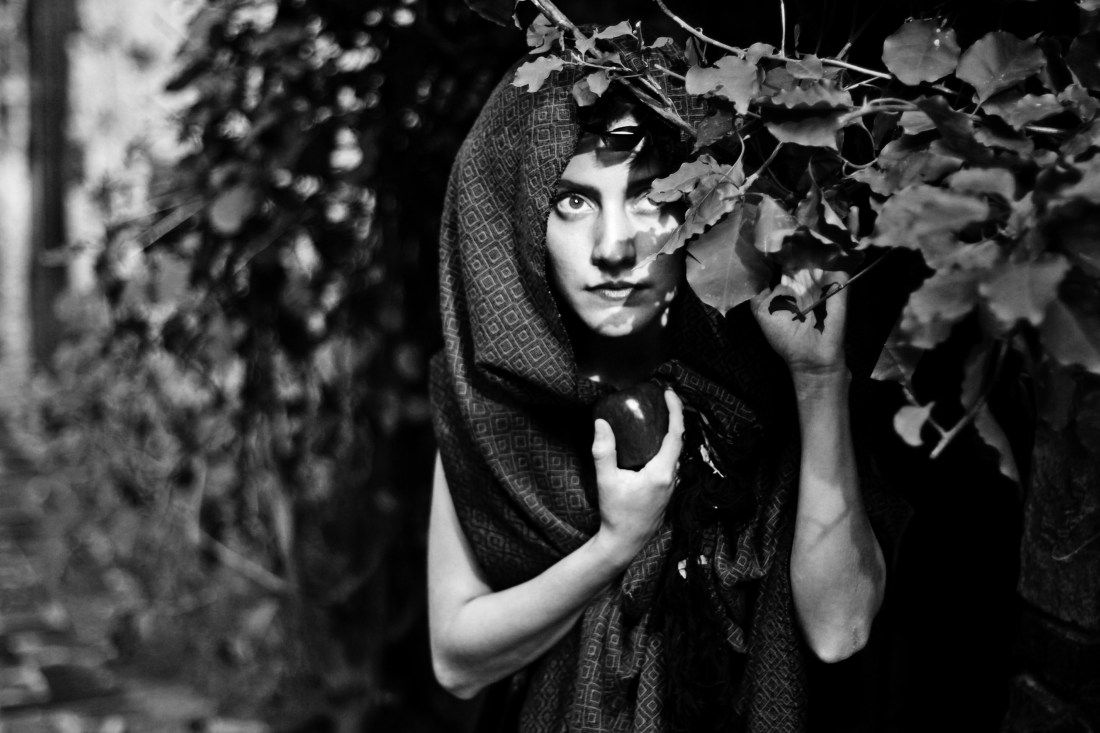
Cristina Incháustegui Massieu is a Fine Arts graduate who grew up in Mexico City during the 90s. She has always been obsessed with visual media, drawing and taking photographs from an early age. As years went by, she developed an intense fixation with photographing women and became a portrait photographer. Massieu’s main focus is to take women out of their common context and transport them to a magical fictitious reality where they become goddesses, queens, witches and fairies. She loves to create a cinematic atmosphere when working with her models.

Mateo Lara

Hellmouth

When I traverse through old memories, I hear my mother’s voice everywhere: talking about the collapse of our relationship. Sticky with regret and bitterness. I confront her every day, especially recently, since she’s always on my ass about taking Lexapro. I hear my mother’s voice everywhere: when I sleep, in every boy I’ve slept with. Some stain right there in my face. I can’t see past the day she told me that she didn’t want to have me, but my grandmother persuaded her. Or the time she told me God would forgive me for being queer, I like the scar it left on my ribs. Some foolish smoke in the air. Some home I grew up in. She would hate me talking about this. It’s a bird perched up high, staring down, luring eyes, gazing, judging—like her.

“You’re the boy blue, the one I would do anything for,” I hear her singing to me through the phone. I’m sedated and unimpressed, but I chuckle and pretend it means something. I can’t tie the cut thread between us. I can’t spool it back together. How unwoven we have become, like that slippery slope theory I’ve heard so much about, the avalanche kept coming.

The boy loves his mother. The boy wants to love his mother. The boy doesn’t know how to love his mother, but he tries. The boy stays up at night figuring out why mom kept taking those men’s side over his. The boy knows he hates men because of her. He likes men because of her. He hates himself because of her.

His mother has perfect teeth, and the boy needs surgery to fix his.

The boy wants to be loved, and his mom cannot get over his last ex, says he was the perfect one, and each boy after that cannot measure up to him. And him. And him.

His mother is beautiful, and she runs the room. His mom doesn’t like any of his new friends because he constantly goes through different ones, so much so that she can never care enough to remember their names.

It’s the boy’s fault. He has a mean-steak, cannot live properly. He tries to pray, but God hasn’t loved him since who knows when.

We stare at the walls. We know the mother tries her best, but she’s broken too.

There are stories left out there to dry up in the California sun, and the wind will pick them up. dust in the hands go away—just go away—as in memories swept out of the mind, forgetting seems the best option when you want to move forward. The sun dries up mother’s tears for never being there. The boy holds hands out with dust, waits for the wind to take all the bad memory away. How do stories find themselves back—dust always collects again.

The mother tells him to stop lying to his doctors, to tell the truth about his fucked-up mind. What do we do with darkness? I can’t turn on the lights. The nightmares stay.

Emotional support—verb—wish it were a noun, deeply embedded in the flesh. The mother couldn’t teach the boy Spanish because she was afraid of what the white people would think.

They called the boy hyper when he was younger, said he needed some therapy to cure his ailments. With an open wound, he grew up with an open mouth, wishing things would be different. When the boy traverses through old memories, they are stained with his mother’s voice, and he cannot tell anymore whose mouth opens to hell: hers or his.

Mateo Lara is from Bakersfield, California. He received his B.A. in English at CSU Bakersfield. He is currently working on his M.F.A. in Poetry at Randolph College in Lynchburg, VA. His poems have been featured in Orpheus, EOAGH, Empty Mirror, and The New Engagement. He is an editor for RabidOak online literary journal.

Mateo Lara

“Winged-Man & His Stars”
For H

Stripped-down                        where              our holy spaces           filled with ants.
I’m ripe & thinking of the first time someone fucked me.

Blades supplemental hot-iron             wings silver-slicked     down my back
I’m hungering here      nested  in the backseat                        of his cobalt.

Soft clay forms       spot sticky with newness       so much newness white & impure
Not saintly      he tells me god does not exist             pay attention to the stars.
I’ll float & drift within his silver-slicked push—take & give.

I enter  his indifference            unwanted but satiated             we last three years
Before my flesh pulses with memory                        flying above & under him.

He talked about cosmic intent                        whatever the fuck that meant
Cosmic intent              super nova & its burst                        orange death/rebirth.
Black hole       sucking & fucking a galaxy      he studied chemistry in college
I studied          his eyebrows               how much he cried when we broke up
How much my mother            loved him        before she started loving me
& stars                        dead pulse       bright dead pulse         so much stars
In the sky        that god did not create                        that’s what the winged-man said
When he unfurled        his silver-slicked wings           to cover me
to cover           my       eyes.

Mateo Lara is from Bakersfield, California. He received his B.A. in English at CSU Bakersfield. He is currently working on his M.F.A. in Poetry at Randolph College in Lynchburg, VA. His poems have been featured in Orpheus, EOAGH, Empty Mirror, and The New Engagement. He is an editor for RabidOak online literary journal.

Vanessa Maki

…then burn

what ways do you like it?  / strawberry sweet ? / or bitter like a glass of tonic water / still lingering inside your mouth / just like swapping spit / in a dark room/ hands finding crevices / hands finding chests/ hands finding hands / the type of sex you don’t keep hushed / that’s bold of you / & it’s bold of you / if love is folded into the lust / it burns like a thick blanket / flopped over a body / during the middle of summer/ so if it’s love / on top of thigh clutching lust / that turns your skin inside out / then burn / let yourself burn beneath the sheets / on top of them / all over them

Vanessa Maki is a queer writer, artist & other things. She’s full of black girl magic & has no apologies for that. Her work has appeared in various places like Really System & others. She is also forthcoming in a variety of places. She’s founder/EIC of rose quartz magazine & is involved in other spaces as well.  Follow her twitter & visit her site .

Ruben Reyes Jr.

ICEcream

Around nine a.m. on the morning of July 4th, you power up the TV and Univision is on.
Later that afternoon, you’ll have to explain to your shockingly white boyfriend exactly what Univision (and Despierta America and Caso Cerrado and Primer Impacto) are.

Univision is running a report about how ICE has detained 30 undocumented workers in a raid. The reports have been stacking up, even though you’re pretty certain you and the folks at Univision are the only ones counting. You wonder if your boyfriend knows what the acronym ICE stands for. The anchorwoman ends the segment by offering a condolence to the families who are being ripped apart.

Immediately after the report ends, the anchorwoman cues to a video of a bear walking through a fast food drive-thru. An employee sticks his hand out of the window and feeds the bear soft serve ice cream, which it hungrily runs its tongue over. Suddenly, you find a deep guttural urge, a gnawing in your stomach, for ice cream.

Thank God your boyfriend had suggested you go out for ice cream that afternoon.

Ruben Reyes Jr. is the son of two Salvadoran immigrants and a senior at Harvard University studying History & Literature. He has written for The Florida Review Online, Poynter, The Harvard Crimson, La Horchata Zine, and other publications. Follow him on Twitter @rubenwrites and Instagram @rubenreyes_jr.